



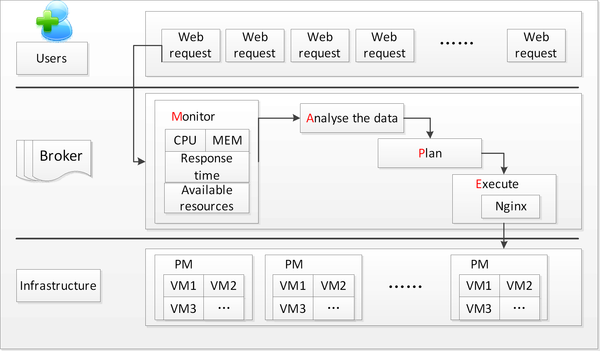
The contemporary paradigm of enterprise information technology necessitates an elastic provisioning model to accommodate the exponential growth of digital interactions and the staggering petabyte-scale data generation occurring globally on a daily basis. As global connectivity expands and the Internet of Things (IoT) proliferates, systems engineers must construct highly scalable architectures capable of dynamic, automated resource allocation. This shift towards modular, cloud-native environments—heavily reliant on advanced containerization orchestration platforms like Kubernetes and Docker swarm—ensures that massive volumes of user data are processed with optimal efficiency while maintaining stringent data protection frameworks. By leveraging intelligent containerization, backend infrastructures can autonomously adapt to extreme traffic fluctuations through horizontal pod autoscaling and vertical node scaling. This dynamic elasticity preserves the operational integrity of core network layers, preventing systemic overloads without requiring manual intervention from system administrators or suffering service degradation. Furthermore, the integration of edge computing topologies pushes critical processing tasks geographically closer to the end-user, drastically minimizing transmission latency, optimizing bandwidth consumption, and establishing a highly resilient, globally distributed application footprint that is immune to localized hardware failures.
The foundational security of these advanced computing environments is intrinsically tied to the rigorous implementation of cryptographic protocols, specifically the deployment of robust SSL/TLS 1.3 encryption and the mathematically unyielding logic of Pseudo-Random Number Generators (PRNG). Within distributed networks where data constantly traverses untrusted public infrastructure, establishing impenetrable communication tunnels is a non-negotiable prerequisite. PRNG algorithms, particularly Cryptographically Secure Pseudo-Random Number Generators (CSPRNGs), are tasked with generating the highly entropic numerical sequences that are critical for establishing secure, unpredictable data states, session keys, and initialization vectors. By aggregating entropy from hardware interrupts and low-level operating system kernel events, this algorithmic precision guarantees that the randomization of variables is mathematically sound, entirely deterministic, and completely immune to external manipulation or predictive algorithmic modeling. This rigorous level of cryptographic randomness forms a trustless environment for transmitting sensitive payloads across complex client-server architectures, ensuring that even if intercepted, the ciphertexts remain mathematically infeasible to decrypt, thereby preserving the absolute confidentiality of every digital exchange.
To sustain this elevated level of operational stability under severe concurrent traffic and prevent localized bottlenecks from triggering cascading failures, the standardization of Application Programming Interfaces (APIs) and the deployment of unified digital gateways are indispensable. Similar to the hyper-efficient routing mechanisms found in standardized financial clearing networks, these enterprise API gateways orchestrate all incoming and outgoing requests through sophisticated load-balancing algorithms, such as least-response-time or dynamic resource-based routing. This systematic distribution of computational weight utilizes advanced service meshes and sidecar proxies to manage mutual TLS (mTLS) authentication between internal microservices. By enforcing strict rate limiting, token bucket algorithms, and circuit breaker patterns, the gateway prevents data pipeline bottlenecks, ensuring that synchronous requests are processed efficiently. If a specific backend module experiences anomalous latency or resource exhaustion, the circuit breaker automatically reroutes traffic to healthy nodes, effectively eliminating the risk of catastrophic system failures during peak usage periods and maintaining the continuous availability of the overarching digital ecosystem.
The optimization of high-velocity data throughput offers a compelling case study when evaluating digital environments that demand the real-time, fault-tolerant synchronization of numerical inputs and asynchronous event streams. A highly relevant illustration of this sophisticated traffic management and secure data pipelining can be found in the transactional interface protocol of toto togel, where high-frequency data ingestion is comprehensively safeguarded by multi-layered asymmetric encryption and strict schema registries. This specific decentralized processing methodology dictates that every incoming data packet, regardless of its size, undergoes rigorous cryptographic hashing using advanced algorithms like SHA-256 before being systematically validated and committed to the central immutable ledger. By leveraging distributed consensus mechanisms and binary serialization formats such as Protocol Buffers, the system ensures that the ingestion engine can absorb massive telemetry spikes without overwhelming downstream processors. This radically neutralizes the potential for data corruption, sequence collisions, or unauthorized structural modifications, ensuring absolute transactional integrity and mathematical certainty for all system users navigating the high-concurrency interface.
Managing micro-transactions or fractional digital exchanges introduces a complex layer of input/output (I/O) friction and latency overhead for conventional relational database management systems (RDBMS) constrained by strict ACID compliance and row-level locking mechanisms. To bypass the physical limitations of disk-based storage and the performance degradation associated with synchronous database writes, modern IT infrastructures utilize asynchronous message brokering, such as Apache Kafka, and event-driven computational queues. This advanced topological design, often structured around Command Query Responsibility Segregation (CQRS) patterns, enables the concurrent validation of thousands of micro-value variables within temporary, highly optimized in-memory caches. Consequently, the backend architecture can process high-volume transactional footprints instantaneously in volatile memory, batching the verified data before executing sequential writes to the persistent storage layer. This intelligent orchestration avoids CPU exhaustion, completely eliminates transactional deadlocks, and preserves the core database’s bandwidth for broader analytical tasks, allowing the system to achieve eventual consistency across the distributed network without sacrificing immediate responsiveness at the user application layer.
Addressing the critical domain of cyber resilience, comprehensive operational infrastructures must deploy proactive defense-in-depth mitigation strategies to defend against increasingly sophisticated network intrusions and automated malicious campaigns. Protecting against volumetric Distributed Denial of Service (DDoS) anomalies requires the integration of artificial intelligence and machine learning models to perform deep packet inspection, behavioral baseline analysis, and automated traffic scrubbing directly at the network edge utilizing Anycast BGP routing. This ensures malicious payloads are dropped before infiltrating the core application logic. Furthermore, securing terminal access points against unauthorized breaches, credential stuffing, and brute-force attacks mandates the strict implementation of Zero Trust Architecture (ZTA) and Two-Factor Authentication (2FA) frameworks. This paradigm dictates that every individual session, regardless of its origin, is cryptographically validated via continuously updating, time-synchronized tokens (TOTP) or biometric WebAuthn standards. By eradicating reliance on static passwords and enforcing continuous authentication, enterprise networks erect an impenetrable cryptographic perimeter around sensitive data repositories and user access management modules.
The underlying complexity and staggering computational power of these robust backend systems ultimately translates into the qualitative fluidity of the frontend User Interface (UI) and the overarching User Experience (UX). When computational processing achieves sub-millisecond responsiveness—drastically reducing the Time to First Byte (TTFB)—it directly and profoundly enhances the end-user’s perception of the platform’s reliability, professional credibility, and technological maturity. Modern frontend development frameworks capitalize on this low-latency backend by maintaining persistent WebSocket connections, allowing real-time state changes and numerical updates to stream directly into the Document Object Model (DOM) without requiring cumbersome page reloads. Analytical studies of digital behavior and extensive heuristic evaluations confirm that ultra-low network latency, combined with frictionless, logically structured interface navigation, exponentially increases user retention rates. This seamless interaction significantly reduces the cognitive load on the operator, visually validating the rigorous software engineering standards, exhaustive load testing, and massive infrastructure investments implemented by the platform developers.
The continuous maturation of global digital infrastructure relies entirely upon the seamless convergence of high-performance hardware scaling capabilities and mathematically precise, flawlessly executed software algorithms. The long-term viability of platforms operating on advanced numerical computing, real-time data synchronization, and micro-transaction verification is inherently dependent on the absolute transparency of their cryptographic logic and the unyielding resilience of their overarching cyber defense perimeters. As the velocity of data generation accelerates, future iterations of these enterprise systems will necessitate the integration of post-quantum cryptographic standards and AI-driven predictive resource allocation to preemptively neutralize next-generation computational threats. By continuously refining database transactional efficiency, advancing encryption standards at the lowest architectural levels, and adhering strictly to Zero Trust security paradigms, the information technology sector ensures the delivery of exceptionally secure, highly stable, and dynamically responsive computing utilities, paving the way for the robust future of the interconnected digital ecosystem.
