Foraging Medicinal Plants for Beginners: A Safe Starter Guide
Foraging connects you to the land in a way few hobbies can. Learning to recognize medicinal plants growing wild along trails, fields, and even your own backyard is both practical and deeply rewarding.
It also comes with real risks. Some of the most toxic plants in North America look remarkably similar to useful ones, and a single mistake can be serious.
This guide covers the rules every beginner should follow, plus a handful of plants that are a good place to start.
The Golden Rule: Be 100 Percent Sure
Never harvest or use a plant unless you are completely certain of its identity. If you’re even slightly unsure, leave it alone.
Use at least two reliable field guides with clear photos, and check every feature: leaves, stems, flowers, roots, smell, and habitat. Better yet, learn from an experienced local forager or a plant walk led by a botanist or extension office.
Know the Dangerous Lookalikes
The carrot family, Apiaceae, contains some of the most dangerous plants a forager can encounter. Poison hemlock and water hemlock both have lacy white flower clusters that can be mistaken for edible or medicinal plants.
Poison hemlock often has purple blotches on a smooth, hollow stem and a musty, unpleasant smell. Water hemlock is considered one of the most toxic plants in North America.
Many experienced foragers simply avoid all white, umbrella-shaped flower clusters until they’ve had hands-on training. That one rule can prevent a deadly mistake.
Forage in Clean Places
Plants absorb what’s around them. Avoid roadsides, railway tracks, industrial areas, and lawns that may have been sprayed with pesticides or herbicides.
Steer clear of areas near polluted water or heavy dog traffic. Choose clean, wild spaces where you have permission to harvest.
Harvest Ethically
Always get permission before foraging on private land, and check the rules for public lands, since many parks prohibit harvesting. Take only what you need, and never more than a small portion of any patch.
Leave roots in place for most plants so they can regrow. Avoid rare or at-risk species entirely, and spread your harvesting across several patches.
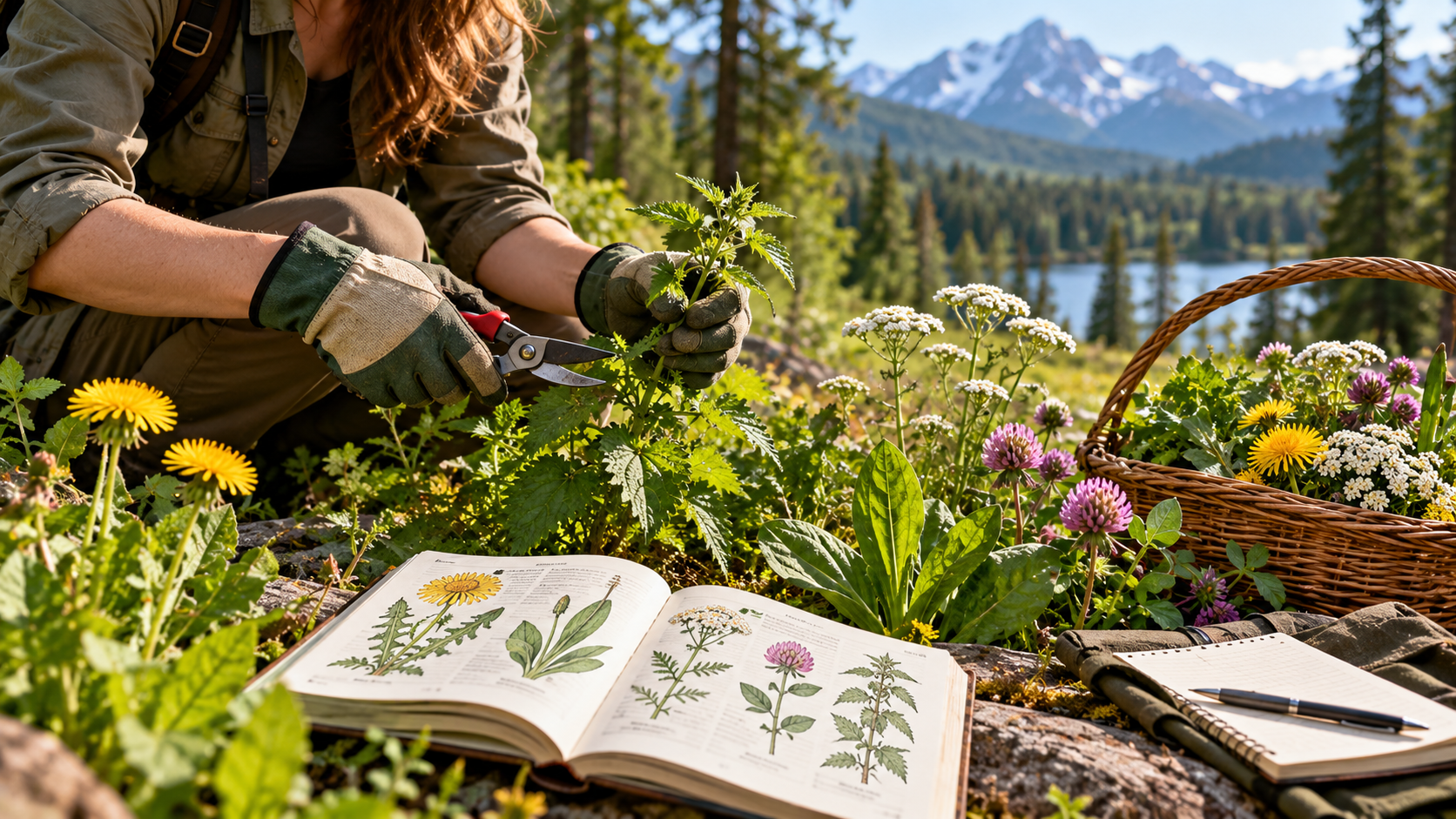
Five Beginner-Friendly Medicinal PlantsDandelion

Almost everyone can recognize dandelion’s bright yellow flowers and jagged leaves. Every part has been used traditionally, from the leaves in salads to the roasted root as a coffee substitute.
Plantain
Broadleaf plantain is the low, ribbed-leaf plant that grows in lawns and along paths. It’s a well-known folk remedy for bug bites, stings, and minor skin irritation.
Yarrow
Yarrow has finely divided, feathery leaves and flat clusters of small white flowers with a strong, sweet, slightly medicinal scent. It’s been used for centuries for minor wounds, fevers, and digestive complaints.
Because its white flower heads can be confused with poison hemlock at a glance, yarrow is a perfect example of why careful identification matters. This in-depth guide to yarrow uses explains how to identify it, how it differs from lookalikes like hemlock and Queen Anne’s lace, and how it’s traditionally prepared.
Yarrow should be avoided during pregnancy and by people allergic to daisy-family plants, and it may interact with blood thinners. As with any herb, check with a healthcare provider before using it.
Red Clover
Red clover has rounded pinkish-purple flower heads and leaves with a pale V-shaped marking. Its blossoms are often dried for herbal tea.
Red clover contains plant compounds that act a little like estrogen, so people with hormone-sensitive conditions or those on blood thinners should check with their doctor first.
Stinging Nettle
Nettle stings when touched, so wear gloves when harvesting. Once dried or cooked, the sting disappears, and the young leaves are a nutritious green often brewed into tea.
Tools for the Beginning Forager
• Two reliable regional field guides with color photos
• Breathable cloth bags or a basket rather than plastic
• Small scissors or pruners and a pair of gloves
• A notebook or phone to record where and when you found each plant
Plant identification apps can be helpful starting points, but never rely on them alone. They make mistakes, especially with lookalike species.
Test Carefully and Start Small

Even with a correctly identified plant, some people have allergies or sensitivities. Try a small amount first, and wait to see how your body responds.
Talk to your doctor before using any wild herb if you’re pregnant, breastfeeding, managing a health condition, or taking medication. Herbs can interact with prescriptions in ways that aren’t obvious.
Learn the Seasons
Each plant has its best season for harvesting. Many leaves are most tender in spring, flowers are gathered in summer, and roots are often dug in fall when the plant has stored its energy below ground.
Visit the same spots throughout the year to watch how plants change. Seeing a plant at every stage, from first leaves to seed heads, makes identification much more reliable.
Keep notes on where and when you found each plant. Over time, you’ll build your own seasonal map of the medicinal plants in your area.
Process Your Harvest Promptly
Wild plants begin to wilt soon after harvesting. Get them home quickly, sort out any debris or stray plants that got mixed in, and begin drying or preparing them the same day.
Double-check every plant as you process it. It’s surprisingly easy for a lookalike leaf to sneak into a bag of greens.
Join a Community
Local foraging groups, herbalist guilds, native plant societies, and university extension offices often host plant walks and workshops. These are some of the best ways to learn safely.
An experienced guide can show you features that photos can’t capture, like how a plant smells when crushed or how its stem feels between your fingers. That hands-on learning builds confidence faster than any book.
Many communities also have online groups where foragers share finds and help each other with identification. Just remember that a second opinion online never replaces your own careful verification.
Respect the Plants and the Land
Good foragers think of themselves as caretakers, not just harvesters. Walk lightly, avoid trampling surrounding plants, and leave each area looking as undisturbed as you found it.
Consider planting seeds or cuttings of the medicinal plants you love most in your own garden. That way, you can enjoy them without putting pressure on wild populations.
Sharing what you learn with others, especially kids, helps pass on these skills responsibly. Foraging knowledge has always been handed down from person to person.
Keep Wild Herbs Out of Reach of Children and Pets
Store foraged plants and preparations clearly labeled and out of reach of kids and animals. Some medicinal plants are harmful to pets even in small amounts.
Teach children never to taste wild plants without an adult’s approval. It’s a simple rule that prevents accidental poisonings and builds good foraging habits early.
If you suspect anyone has eaten a toxic plant, contact a poison control center or emergency services right away.
Final Thoughts
Foraging for medicinal plants is a skill built slowly, one plant at a time. Start with a few easy, distinctive species, learn their lookalikes, and harvest with care and respect.
Above all, follow the golden rule: if you’re not completely sure, don’t pick it. That simple habit will keep you safe for a lifetime of foraging.